
Vietnam’s feedstock supply potential for sustainable aviation fuel HVO/SAF
Abstract
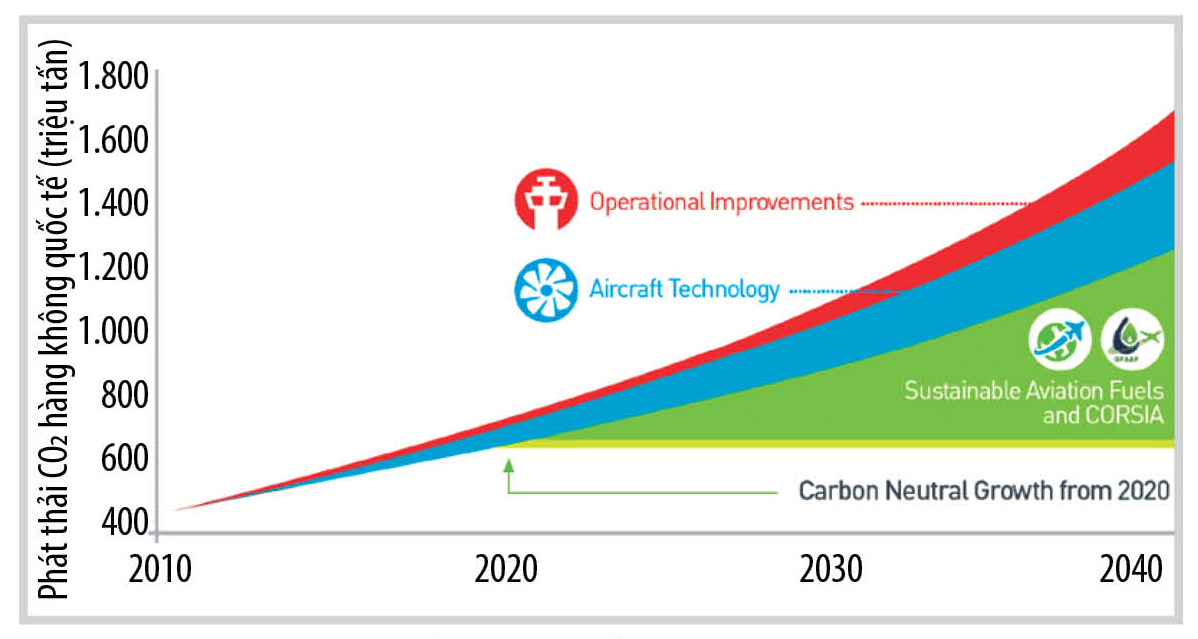
The International Civil Aviation Organization (ICAO) is advancing the adoption of sustainable aviation fuel (SAF) to mitigate CO2 emissions through the Carbon Offsetting and Reduction Scheme for International Aviation (CORSIA), targeting a start to emissions reductions by 2027. Among SAF production technologies, hydrogenated vegetable oil (HVO), which refines vegetable oils, waste oils, and fats via hydrodeoxygenation, has been commercialized worldwide. This approach uses by-products as feedstock, achieving up to an 80% reduction in CO2 emissions without altering land use for feedstock cultivation.
Vietnam has potential to sustainably supply feedstock for SAF production, primarily from fish fat - a by-product of pangasius export, and used cooking oil (UCO) - a by-product of food processing. This potential can be further enhanced with improvements in collection efficiency. In 2023, Vietnam exported approximately 120,000 tons of fish fat and 50,000 tons of used cooking oil to SAF producers such as Neste and Diamond Green Diesel.
This paper introduces SAF production technologies and analyzes the factors indicating Vietnam’s feedstock supply potential for the international market in sustainable aviation fuel production using HVO technology.
References
ICAO Secretariat, “Introduction to the ICAO basket of measures to mitigate climate change, Chapter IV: Climate change mitigation: Technology and operations”. [Online]. Available: https://www.icao.int/environmentalprotection/Documents/EnvironmentalReports/2019/ENVReport2019_pg111-115.pdf.
ICAO Environment, “CORSIA States for Chapter 3 State Pairs”, 2024. [Online]. Available: https://www.icao.int/environmental-protection/corsia/pages/state-pairs.aspx.
European Union, “Regulation (EU) 2023/2405 of the European Parliament and of the Council of 18 October 2023 on ensuring a level playing field for sustainable air transport”, 2023. [Online]. Available: https://eur-lex.europa.eu/legal-content/EN/TXT/PDF/?uri=OJ:L_202302405.
KPMG, “Is Asia Pacific a game changer for the global SAF industry?” 2023. [Online]. Available: https://assets.kpmg.com/content/dam/kpmg/sg/pdf/2024/05/is-asia-pacific-a-game-changer-for-the-global-saf-Industry.pdf.
U.S Department of Energy, “Alternative fuels data center”, 2024. [Online]. Available: https://afdc.energy.gov/fuels/sustainable-aviation-fuel.
World Economic Forum, “Dataset adapted from “Clean skies for tomorrow”".
Alba Canovas, Alex Ehrenhaus, Arianna Baldo, Carina Wessels, Carolina Grassi, Mariana Tracastro, Onofre Andrade, Otavio Cavalett, Pratima Gangopadhyay, Robert Boyd, and Sharmine Tan, “Sustainable feedstock assessment for sustainable aviation fuel production in Southeast ASEAN”, The Roundtable on Sustainable Biomaterials, 2024.
GREENEA, “New players join the HVO game”. [Online]. Available: https://greenea.com/en/publication/new-players-join-the-hvo-game/.
GREENEA, Horizone 2030, “Which investments will see the light in the biofuel industry?”, 2021. [Online]. Available: https://www.greenea.com/wp-content/uploads/2021/01/Greenea-Horizon-2030-Whichinvestments-will-see-the-light-in-the-biofuel-industry-1.pdf.
Hydrocarbon Processing, “Scaling up SAF production with Fischer Tropsch technology”, 2024. [Online]. Available: https://www.hydrocarbonprocessing.com/news/2024/04/scaling-up-saf-production-withfischer-tropsch-technology.
SAF Inverstor, “Project: LanzaJet freedom pines, georgia, USA”, 2022. [Online]. Available: https://www.safinvestor.com/project/141923/lanzajet-freedom-pinesgeorgia-usa/.
Jane O’Malley, Nikita Pavlenko, and Yi Hyun Kim, “Meeting the SAF grand challenge: Current and future measures to increase U.S. Sustainable aviation fuel production capacity”, International Council on Clean Transportation, 2023.
Nikita Pavlenko, Stephanie Searle, and Adam Christensen, “The cost of supporting alternative jet fuels in the Eupean Union”, International Council on Clean Transportation, 2019.
Amsterdam-Rotterdam-Antwerp, “Argus biofuels daily international market prices and commentary”, 2023.
Gain, USDA, “Biofuels annual”, 2023.
S&P Global, “Demand heats up for Asia’s used cooking oil, 2022”. [Online]. Available: https://www.spglobal.com/commodityinsights/en/market-insights/blogs/agriculture/072922-sustainable-aviation-fuelused-cooking-oil-uco-methyl-ester.
S&P Global, “Global UCO supply to double by 2030 as US, EU policies drive Asian supply”, 2023. [Online]. Available: https://www.spglobal.com/commodityinsights/en/market-insights/latest-news/agriculture/100423-global-uco-supply-to-double-by-2030-as-us-eu-policies-drive-asian-supply.
Anouk van Grinsven, Emiel van den Toorn, Reinier van der Veen, and Bettina Kampman, “Used Cooking Oil (UCO) as biofuel feedstock in the EU”, 2020. [Online]. Available: https://cedelft.eu/publications/usedcooking-oil-uco-as-biofuel-feedstock-in-the-eu.
Tenny Kristiana, Chelsea Baldino, and Stephanie Searle, “An estimate of current collection and potential collection of used cooking oil from major Asian exporting countries”, International Council on Clean Transportation, Working paper 13 February 2022.
Hiệp hội Chế biến và Xuất nhập khẩu Thủy sản Việt Nam, “Năm 2022, sản lượng cá tra toàn cầu có thể giảm 4,6%, nguyên nhân chủ yếu từ Việt Nam”, 2022.
Statista, “Production volume of refined vegetable oil in Vietnam from 2015 to 2022”, 2024. [Online]. Available: https://www.statista.com/statistics/1115232/vietnamrefined-vegetable-oil-production-volume.
Margarida Ribau Teixeira, Ricardo Nogueira, and Luís Miguel Nune, “Quantitative assessment of the valorisation of used cooking oils in 23 countries”, Waste Management, Volume 78, pp. 611 - 620, 2018.
Statista, “Demand for instant noodles in Vietnam 2014-2022”, 2024. [Online]. Available: https://www.statista.com/statistics/1110859/vietnam-serving-demand-forinstant-noodles/.
Veronique Gibon, Wim De Greyt, Jan De Kock, and Marc Kellens, “Requirements and solutions for the pretreatment of HVO feedstocks”, 2022. [Online]. Available: https://advancedbiofuelsusa.info/requirements-andsolutions-for-pretreatment-of-hvo-feedstocks/.
1. The Author assigns all copyright in and to the article (the Work) to the Petrovietnam Journal, including the right to publish, republish, transmit, sell and distribute the Work in whole or in part in electronic and print editions of the Journal, in all media of expression now known or later developed.
2. By this assignment of copyright to the Petrovietnam Journal, reproduction, posting, transmission, distribution or other use of the Work in whole or in part in any medium by the Author requires a full citation to the Journal, suitable in form and content as follows: title of article, authors’ names, journal title, volume, issue, year, copyright owner as specified in the Journal, DOI number. Links to the final article published on the website of the Journal are encouraged.


